
Luzerne Resident Lookup Records
Luzerne County does not publish one complete roll of current residents. Instead, the useful starting record depends on the question. Assessment data tests an ownership or tax-mailing connection. A deed identifies parties to a recorded transfer. The court portal identifies a public case trail. County voter products can document registration information when obtained under the required election process. State vital material supplies a dated event, while probate can connect a deceased person to an estate number. Treat each as a narrow piece of evidence, not a complete biography.
| Record | What It Can Confirm | Custodian | Access Route |
|---|---|---|---|
| Assessment parcel | Owner of record, property location, tax-mailing fields, PIN | Luzerne County GIS and assessment sources | Public data, then Assessment Office confirmation |
| Recorded deed | Named grantor or grantee, document date, legal property link | Recorder of Deeds | IQS, Landex, counter, or Records Center |
| Court docket | Party, case number, filing and public status trail | Pennsylvania Judiciary Case Search | Public portal and local filing office |
| Voter record | Registration-related data in the requested product | Luzerne Bureau of Elections | Personal status route or signed county request |
| Vital or probate index | Dated event, marriage application, estate number, will indicator | PA Department of Health or Register of Wills | State, IQS, office, archive, or request form |
A property result is most useful when an owner connection is the question. Start with a court or estate index when the name is tied to a case, death, or inheritance matter. For an old birth or death lead, use the public historical route before seeking a certificate. A resident lookup becomes more reliable when the source date, county, and spelling are noted beside every result.
Luzerne Resident Court Search
The statewide Pennsylvania Judiciary Case Search is the public name-search entry for Luzerne County. Select Luzerne as the county, begin with participant last and first name, and add a filing-date range, participant role, court office, or case-status control only when a broad result needs narrowing. The portal also exposes docket and citation paths. Do not use SSN or driver-license fields for routine research. The court warns that filing-office updates can lag on a docket sheet.
The public result is an index trail. A selected docket can provide a docket number, court and county, caption, participant names and roles, category or type, filing date, public status or disposition line, event dates, judge or office, and the docket-entry sequence. It does not promise document images or unrestricted access to every filing. Criminal records go through the Clerk of Courts and civil records through the Prothonotary; both local filing offices are at 200 N. River St. in Wilkes-Barre. A targeted written case-record request should state the docket number, court, spelling, date range, and document wanted.
The official case-search form is shown below with its party and county controls.
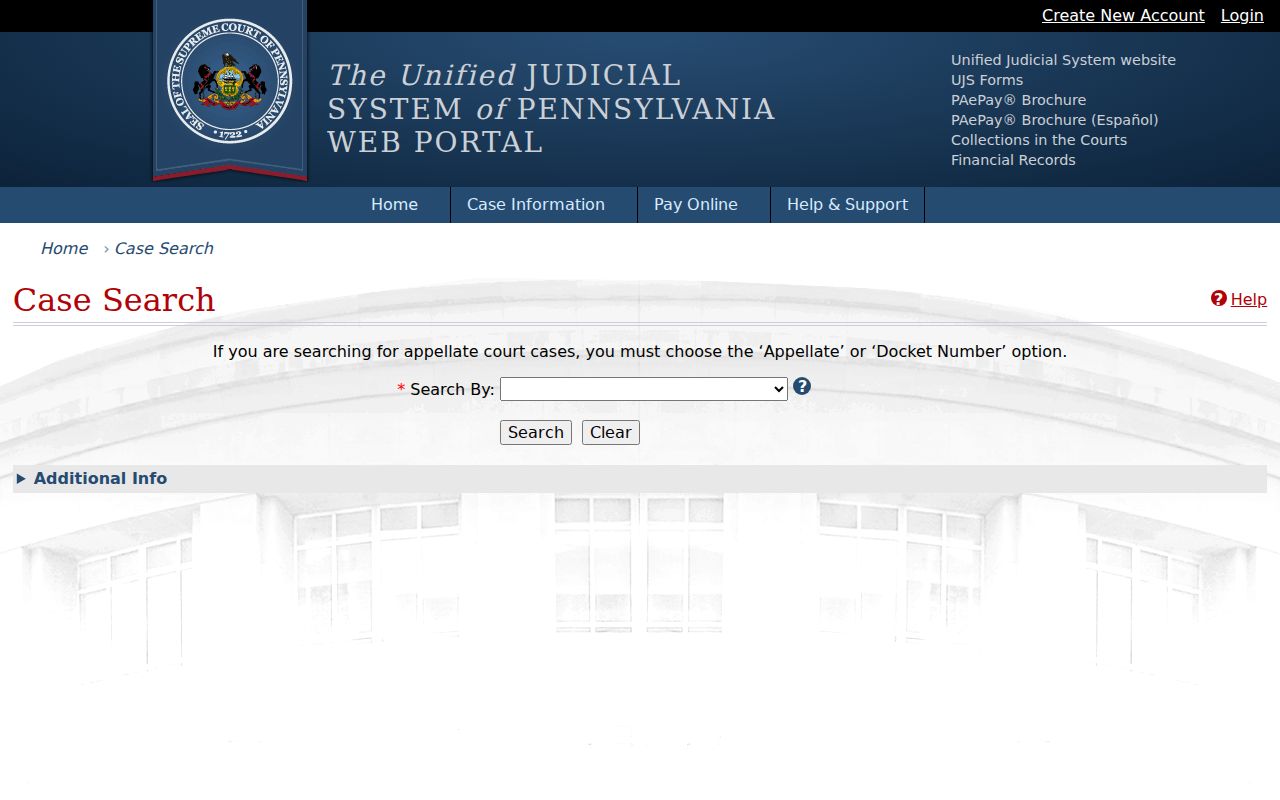
Use the opened docket to frame a precise request with the local custodian, not to assume that a same-name result identifies one Luzerne resident.
Controlled Luzerne Resident Voter Files
Pennsylvania’s registration-status route is for an individual checking status. It is not a public name directory. Luzerne County separately offers defined voter-file products, including Street Lists, Walking Lists, Public Information Voter Listings, and Voter Exports. A Street List can contain name, residential address, mailing address, party, and active or inactive status. It is released through the county’s documented process, not an open web browse.
Every county request requires requester identification, a signed statutory affirmation, and the product and delivery choice. Email requests require a copy of identification, while in-person requests require ID presentation. The affirmation says the data will not be used for unrelated purposes or published online. The form cites 25 Pa.C.S. § 1404 and related election rules. Electronic reports are generally $20, while printed reports are $0.25 per page for ordinary requesters. Signatures and SURE registration numbers are excluded from the public list.
The state registration-status page illustrates the distinct personal-status access channel.
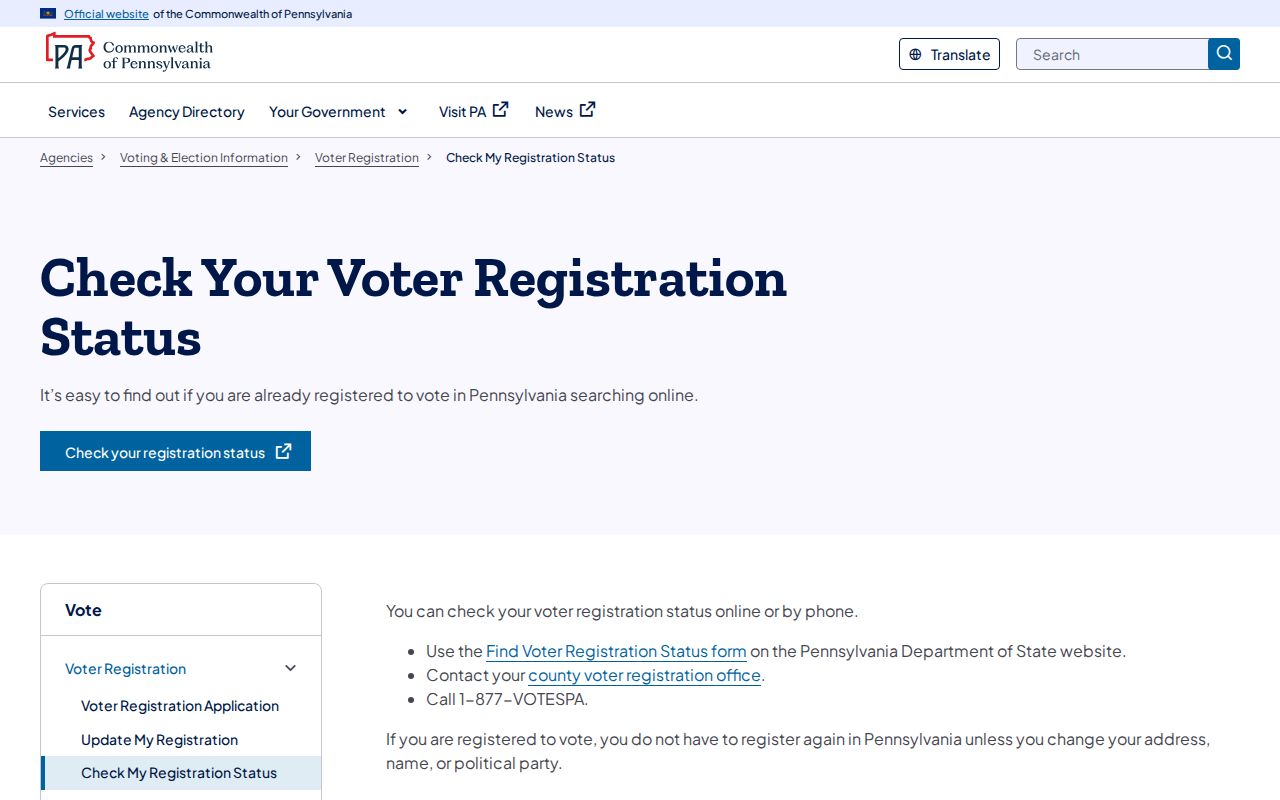
For a defined public file, use the county’s signed request form and preserve its use limits with the record.
Note: Voting history reflects participation, never a ballot choice.
Luzerne Vital Records for Residents
The Pennsylvania Department of Health holds births and deaths from 1906 forward. Its birth-certificate and death-certificate routes offer online ordering, mail applications, and Vital Records Public Offices. Eligibility and identification rules apply to ordinary certificates. For public-era genealogy, the State Archives index routes cover births from 1906 through 1913 and deaths from 1906 through 1968. The statutory public thresholds are 105 years after birth and 50 years after death; a public threshold does not mean an image is online.
Luzerne’s Register of Wills is the county marriage-license custodian. Historic marriage applications can be searched in IQS from October 1885 through August 2004. A local divorce decree is a court record, so use the UJS docket to locate a case and then ask the Prothonotary about the permitted copy route. Libraries, maps, cemetery records, and obituaries can narrow a name or date before a formal request, but they do not issue certificates.
The Department of Health birth-order page shows the state’s official ordering path.
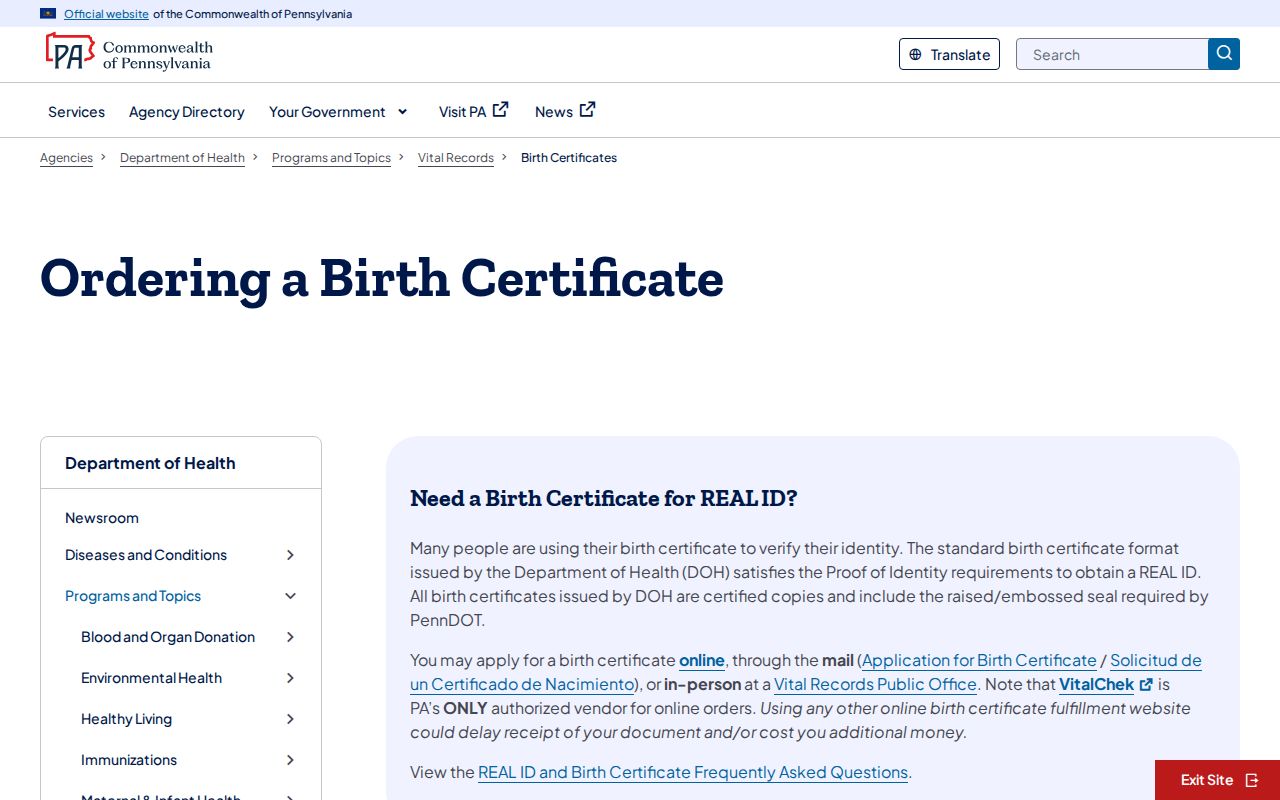
Use the state form and current eligibility instructions for a certificate, and use the Archives route for public historical index research.
Verify a Luzerne Resident
Names alone are weak evidence. A sound Luzerne resident lookup starts with a non-sensitive anchor, such as a full spelling, known municipality, old street, approximate period, estate number, Recorder reference, or docket number. First test whether the geography matches. A postal city or ZIP can cross municipal lines, so compare the county’s map location and PIN with the address in the older source. Then look for two independent records that answer different questions instead of forcing one record to do all the work.
- Record the name exactly as found, including initials, alternate spellings, and a date range.
- Check a county property or GIS result for the property location, PIN, and owner-of-record connection.
- Search the Luzerne-filtered court portal or estate index using the same variant, then capture the public docket or estate number.
- Compare dates and geography against a vital index, a dated directory, or a permitted voter record before treating the records as the same person.
- Ask the custodian for a certified or permitted copy only after the index trail identifies the right record.
- Docket
- A court’s running case record, usually organized by docket number and dated entries.
- Index and image
- An index points to a record. An image is the underlying scanned document, which may have a separate access rule.
- Certified copy
- A copy issued by the records custodian with its official certification for the purpose the custodian allows.
A property location and a tax mailing field are different kinds of evidence. Likewise, an old directory entry is dated evidence, and a court docket is not the full file. Record the mismatch as well as the match. That makes it easier to stop when the official trail ends.
Luzerne Resident Estate Index
For an heir or estate question, the Register of Wills route can be more useful than a broad name search. Luzerne’s historic IQS estate index covers 1875 through 2004 and can supply the decedent’s name, estate number, opening year, and a will indicator. Those details help distinguish one person from another and let the researcher ask the Records Center about a permitted file pull or scan. Later Orphans’ Court material may be office-only, and adoption or guardianship records have separate restrictions.
The Register of Wills and Orphans’ Court page identifies the local probate and marriage roles.
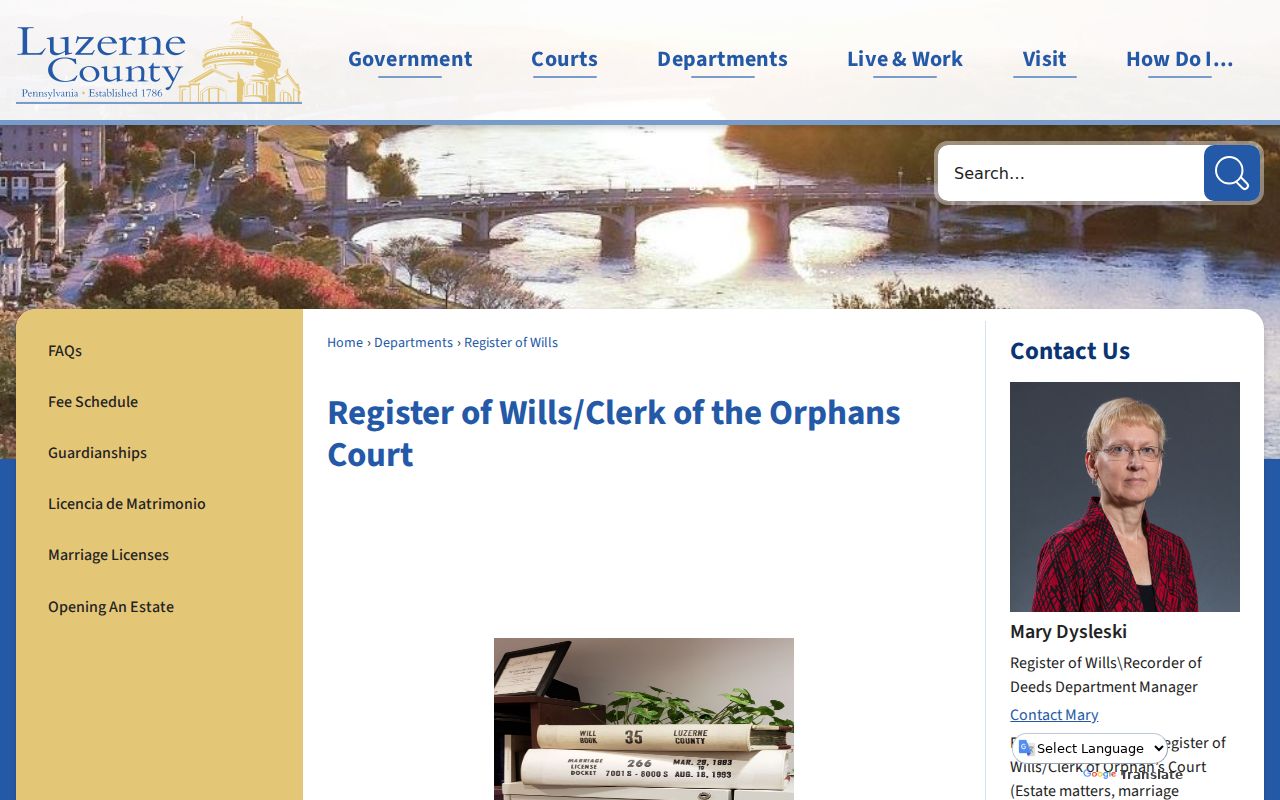
The index creates a focused estate request. It does not establish every heir, relationship, or current address without permitted supporting records.
Insider tip. Keep the estate number and will indicator with the source date before contacting the Records Center at 570-825-1863. That gives staff a defined record to locate rather than a general name search.
Narrow Luzerne Resident Results
State business and license systems can answer a limited affiliation question, not a general people-search question. The Pennsylvania business entity search accepts an entity name or file number, not an individual owner name or street address. A result can show filing information, status, initial filing date, formed-in jurisdiction, agent information, and, when filed, officer or general-partner details. Match options include contains and starts-with, so capture the exact entity name before treating a result as a possible connection.
PALS can show a displayed professional license status and board discipline. It is useful only for the public credential fact. A same name, a business filing, or a license record does not by itself prove that the person is the Luzerne resident being researched. Use the date and location anchors already established from a county or state custodian.
Note: Pennsylvania business records are indexed by entity name or number, not as a general resident-address search.
Where Luzerne Resident Searches Stop
Public access has firm boundaries. The Pennsylvania Right-to-Know Law is a route for an existing agency record; it does not require an agency to create a new compilation and does not override a court order or a separate confidentiality statute. Sealed, juvenile, expunged, and otherwise confidential court material remains outside routine access. Birth and death certificates remain subject to their state periods and application rules. Adoption material and later guardianship detail use restricted county channels.
When an official record appears wrong, contact the custodian that owns the field: the Assessment Office for a property-card question, the Recorder for a recorded document, the Bureau of Elections for voter data, the court filing office for a clerical or access issue, or the Department of Health and State Archives for vital material. A records request is not a correction process. Pennsylvania’s Office of Open Records explains the RTKL framework, including the distinction between existing records and newly created compilations.
Lawful use. Use public Luzerne records for personal, lawful research and respect every access condition. Do not use a result to stalk, harass, threaten, or intimidate another person.
Pennsylvania ACP Address Protection
Pennsylvania’s Address Confidentiality Program gives eligible survivors a substitute mailing address for covered records. It is administered by the Office of Victim Advocate under 23 Pa.C.S. Ch. 67 and is part of a safety plan. Actual participant address and application information are confidential under the program’s rules. The program is not a way to locate a protected resident.
A certified local victim-service provider can assist with an application. The state also lists online, phone, and mail channels. Where an ACP record, protected voter information, or restricted court field affects a result, stop and use the official safety or correction channel. Privacy protection is evidence that the record system is working as intended, not a gap to work around.