
Begin a Luzerne Resident Search
There is no single county roll that names every Luzerne resident. Start with the record that uses the detail you know. A property address is best for the assessment data and GIS map. A full name can lead to the Pennsylvania court index, a voter-status check, a deed party, or an estate index. A past address or household needs the historical directory shelf. Each source answers a narrower question, which prevents a property owner, tax-mail recipient, or court party from being mistaken for a present household member.
For a broad beginning, keep a short log of spelling variants, municipality, address form, PIN, document citation, and date. Luzerne has boroughs, cities, and townships, so first identify whether the place is Wilkes-Barre, Hazleton, Pittston, Nanticoke, or another municipality. County property, Recorder, court, GIS, and election routes cover the county. Permit, code, cemetery, and some local files may be held by that individual municipality instead.
- Use the property assessment search or GIS map when an address or owner name is known.
- Use the official Pennsylvania voter-status route for an individual registration question, then contact the county Bureau of Elections if that route does not resolve it.
- Follow recorded-party names in the Recorder index when the question is about ownership, a transfer, or a prior address connection.
- Check the Pennsylvania Judiciary Case Search only as a lead, then use the local clerk or Prothonotary for permitted case material.
- Take an older household question to Osterhout Free Library or the Luzerne County Historical Society, with a year and municipality.
Note: A match in one Luzerne index is a lead that should be compared with another permitted record before relying on it.
Luzerne County Offices Behind Resident Records
The county keeps its useful resident evidence in separate offices. The Recorder of Deeds maintains recorded-property material. Assessment and GIS resources tie an owner and property location to a PIN. The Register of Wills and Clerk of the Orphans' Court handles marriage and estate paths. The Clerk of Courts and Prothonotary keep different court files. These offices answer different questions, so a name search should be followed by the office that actually controls the record.
Luzerne County Recorder of Deeds
153 N. River Street
Wilkes-Barre, PA 18711
570-825-1641
Luzerne County Assessment and GIS
Courthouse annex resources
Wilkes-Barre, PA
County portal access
Luzerne County Bureau of Elections
County election records
Wilkes-Barre, PA
County request channels
The Luzerne by-street reference follows the address and parcel chain in more detail. For a person-first question, use a name, municipality, and date to avoid treating an office index as a complete resident list.
Luzerne Assessment Searches Work With Less
The county's assessment guidance has a useful local rule: put in less information. An owner name alone often returns the widest useful result set. For an address, enter the street name without the house number or a suffix such as street, road, or avenue, and omit periods. The county warns that its property designation may not match the familiar street form. A bare search such as W Maple can be more productive than a fully punctuated address.
A returned property card is a current county ownership and tax record, not a census. It can show a property location, PIN, land and total assessed value, plate number, grantee field, and mailing components. A mailing line may be an alternate contact rather than the place where a person lives. Use the PIN to compare the assessment entry with the parcel map and use the deed citation to investigate a recorded transfer.
| Assessment field | What it helps establish | Luzerne search note |
|---|---|---|
| OWNER | Owner name on the assessment record | Owner-only searching can be effective. |
| PROP_LOC | County property-location field | May differ from the common street format. |
| PIN | Parcel bridge across county systems | Use it with GIS and Recorder citations. |
| MAIL_ADD1, CITY, STATE, ZIP | Tax correspondence information | Do not read it as current occupancy proof. |
| PLATE_NUM and GRANTEE | Map and transfer clues | Compare against legal description and deed data. |
Note: The assessment approach is a Luzerne-specific search tip, not a guarantee that every property or household will appear online.
Luzerne Recorder Records Span Two Systems
The Recorder supplies a long property-party trail. IQS EFilm/Infodex is the county's free older-deed route for deeds from 1786 through 1967 and historic grantor/grantee indexes through August 1, 1993. The modern Landex environment covers 1968 forward, with images indexed from December 1980 forward. A result should be logged with the party role, document type, recording or filing date, document number or book/page, legal description or PIN reference, and whether an image or copy is available.
A deed connects named parties to a recorded transaction and legal property description. It does not prove that every party lived at the property or lived there at the time a reader expects. At the system handoffs, retain the book/page or instrument citation and continue in the next index. The Records Facility keeps bound books and microfilm backups for historical work, and certified Recorder copies must be obtained through the office rather than online.
See the Luzerne County Recorder of Deeds page below for the county's access overview. Its older IQS and newer Landex paths have different coverage and copy rules, so the screenshot belongs in the broader chain rather than proving a particular property.
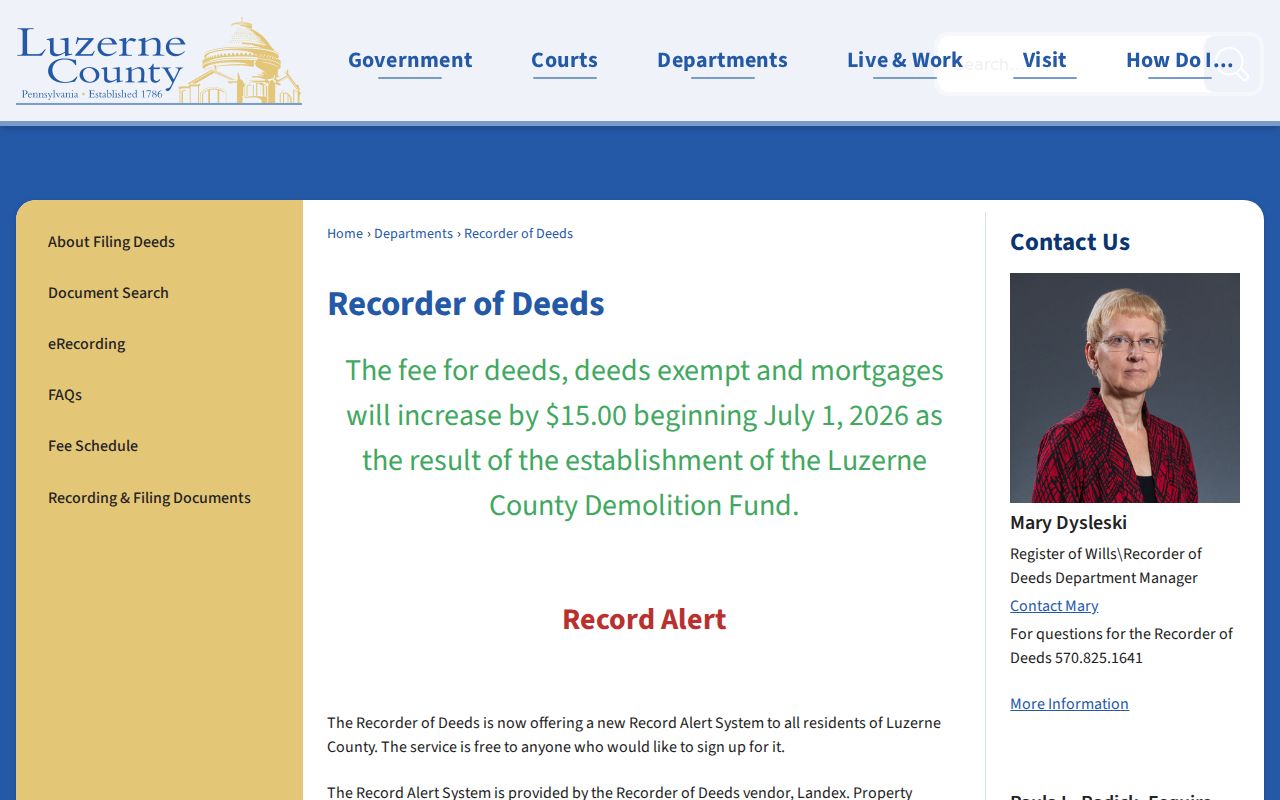
The county Recorder page directs readers among the older IQS route, Landex access, and office services. It also links to free Record Alert enrollment for up to five names or PINs. That monitoring service gives notice, not prevention or validity confirmation.
Luzerne Voter Records Use Separate Channels
Pennsylvania's voter registration status service is the route for an individual's registration question. It is not a public browse-all-residents tool. Luzerne County also documents a signed voter-file request process that can provide defined public-information, street-list, walking-list, or export products. The requestor must provide identification and the required affirmation, and protected information stays outside that public-information route.
Election Code section 25 Pa.C.S. § 1404 governs the public-information-list boundary. It excludes electronic signatures and SURE registration numbers, among other protected material. If the online status path fails, use the county elections office or the state's phone alternative. A street file should be used carefully as a date-specific registration record, not a statement that every person at an address is a resident.
The county voter-file request form shows the request channels and product choices documented for Luzerne County. It is a formal request process rather than an unattended name lookup.
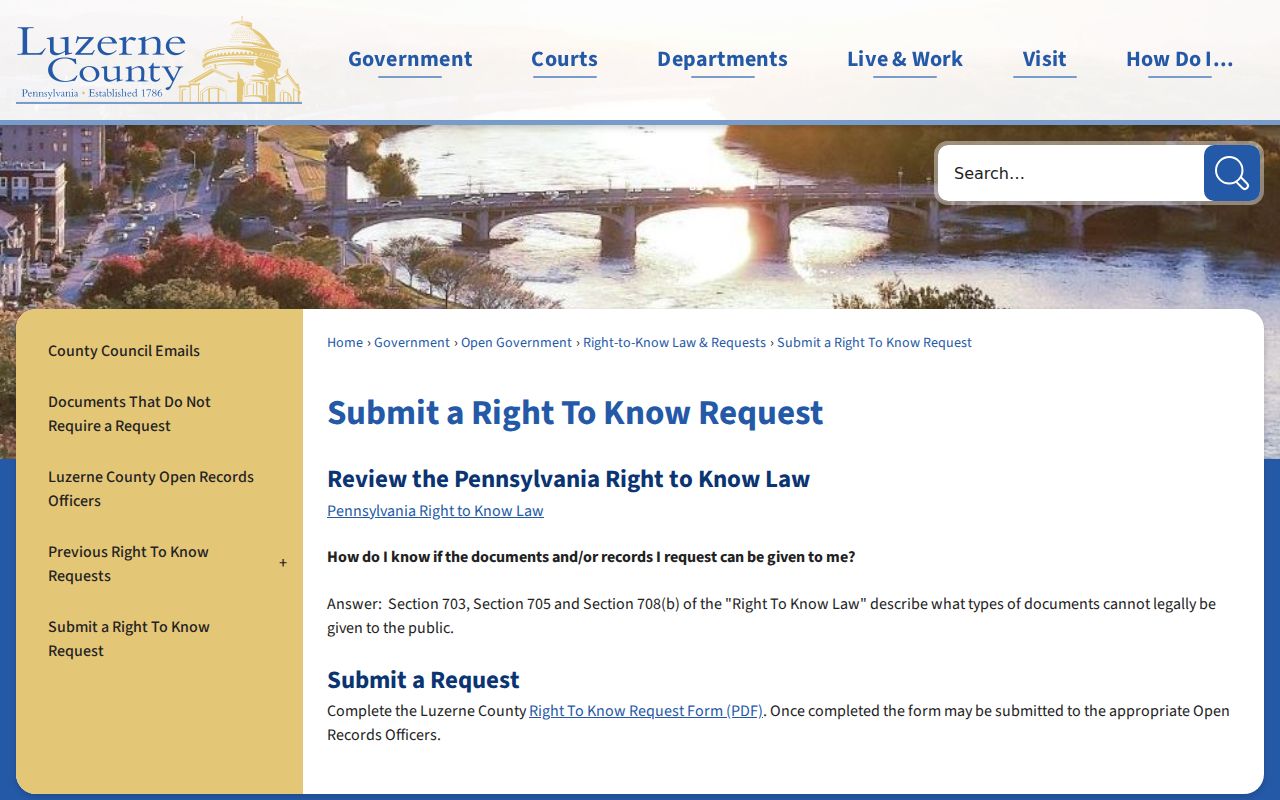
When a defined county agency record is not online, the county's Right-to-Know page is the starting point for a written request. It cannot compel a custodian to create a new resident compilation or release protected fields.
Current Luzerne Resident Directory Sources
Current sources are best used in combination. The assessment and GIS resources describe parcel and owner information. The voter system has its own access rules. The Recorder identifies parties to recorded property documents. Court entries are public docket leads with their own omissions. These sources complement one another, but none is a universal directory of residents.
| Current Luzerne source | What it can confirm | Custodian | Access route |
|---|---|---|---|
| Assessment and tax data | Owner, property location, PIN, mailing fields | County assessment resources | Assessment search, GIS, counter |
| GIS parcel layer | Parcel context, owner label, values, structure address | County GIS | Free portal; deeper layers are subscription features |
| Voter records | Individual status or defined public list | State and county elections | Status service or signed county request |
| Recorded documents | Grantor/grantee party and property trail | Recorder of Deeds | IQS, Landex, office, Records Facility |
| Court docket | Case number, party role, filing and event trail | Pennsylvania judiciary and local offices | State portal, clerk or Prothonotary request |
A commercial people-finder category can be convenient, but it may mix old and unmatched records without showing the source trail. Official sources take more steps and often have access limits, yet they identify the custodian, date, field type, and verification path. That makes them stronger for family research, an estate question, or checking a seller's claimed property connection.
Luzerne Court and Vital Checks Confirm Leads
Pennsylvania Judiciary Case Search lets a researcher choose Luzerne County and narrow a participant search with fields such as last name, first name, filing dates, court, docket type, case category, case status, and participant role. A public result can supply a docket number, caption, party role, filing date, events, and public status line. Recent filing-office entries can lag, and a docket is not a certified record or a complete file.
Birth and death certificates are held by the Pennsylvania Department of Health from 1906 forward. Public historical research follows different windows and channels: births become public after 105 years and deaths after 50 years. The State Archives route lists public indexes for births from 1906 to 1913 and deaths from 1906 to 1968. Luzerne marriage licenses and divorce court files have their own county paths. Match a name against an address, date, and another permitted record before deciding two hits name the same person.
- Docket
- An index of a court case and its events, not necessarily every document image.
- Index
- A finding aid that identifies a record and citation; it may not include the underlying image.
- Certified copy
- A custodian-issued copy for a purpose that requires official certification.
- Parcel
- A mapped property unit, often linked to a PIN in county systems.
Luzerne Privacy Boundaries Matter
Pennsylvania's Right-to-Know Law, Act 3 of 2008, begins with a presumption of access to existing agency records, subject to exemptions and other laws. It does not override sealed court files, adoption confidentiality, vital-record eligibility rules, protected voter data, or the Pennsylvania Address Confidentiality Program. The ACP, under 23 Pa.C.S. Chapter 67, protects an enrolled survivor's actual address through a substitute-address program.
The county RTKL form supports email, mail, fax, and in-person submission. Name the correct agency, identify an existing record, give the useful date range or citation, and state whether inspection, copies, or certification is requested. The normal response deadline is five business days, with a written extension available under the law. Direct a municipal permit question to the municipality rather than assuming county government holds every local file.
Luzerne Records Facility Adds an Offline Route
The Luzerne County Records Facility is the bridge when a web result ends at an old citation. It is at 85 Young Street in Hanover Township and offers public research Monday through Friday, 9:00 a.m. to 4:30 p.m. Call ahead with the volume, index, file, book/page, or other reference so staff can identify the archival material to pull. Its retained departmental material includes records connected with the Recorder, Register, assessment, GIS, planning, tax, and court functions.
The Records Facility complements the online portals rather than replacing them. A researcher may begin in IQS or Landex, preserve the citation, and request a permitted book, microfilm, or file through the Facility or the original office. The same practical approach applies to the county GIS service if a portal is temporarily unavailable: use a PIN or address for the documented counter, contact, or aerial-map fallback instead of assuming that all layers are accessible from home.
The Records Facility information page is shown below. Its public-research availability makes it an important Luzerne fallback for a historically grounded residents directory search.
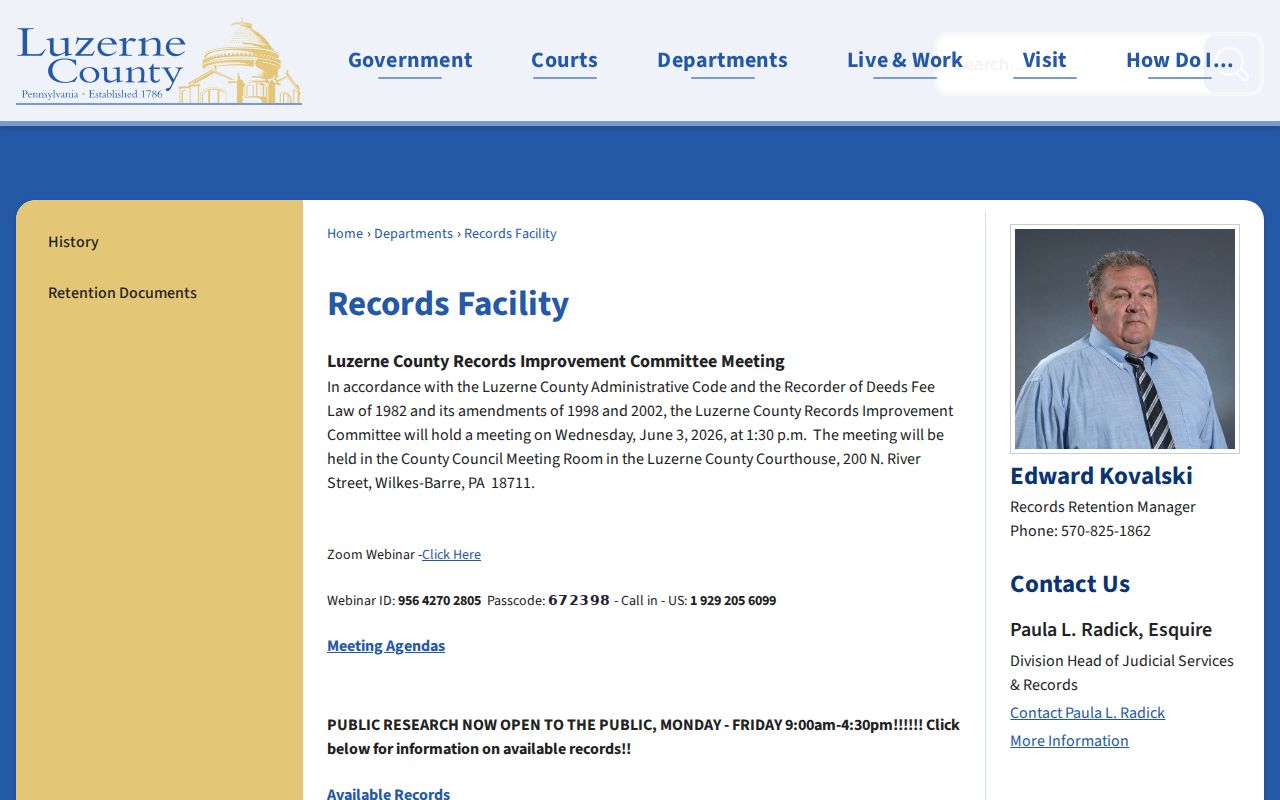
The page identifies the County Records Facility as a research point for archived departmental material. A call with a precise reference is more useful than an open-ended request for a person search.
Historical Luzerne Resident Directory Shelves
The historical trail lives at local institutions rather than in a single digitized county book. Osterhout Free Library lists Wilkes-Barre city directories from 1884 to the present, with additional local runs for Hazleton, Nanticoke, Pittston, and Plymouth. The Luzerne County Historical Society holds city directories from 1871 through 2004, maps and atlases, census indexes, surname files, and research collections. A directory entry can place a named householder at an address in a particular year, but it should be read alongside deeds, maps, census material, and newspapers.
Some, not all, Historical Society directory volumes have a street index. Ask for the city and exact year, then ask whether that volume has an address-first section. The Luzerne city directories collection explains the shelf, entry forms, and household tracing method in depth. FamilySearch's 1931 Polk Greater Wilkes-Barre catalog entry is film-only, so it should be treated as a library-access lead rather than a home-viewable volume.
The Osterhout genealogy service documents the local directory and genealogy route. Library and historical-society collections are especially important when a paper directory, clipping, map, or microfilm record is not part of a public web index.
Luzerne History Changes Early Searches
Luzerne County was created in 1786 from territory larger than its modern boundaries. Lackawanna, Wyoming, Susquehanna, and part of Bradford County later separated. For an early land or family question, record the historical place name before assuming that a present-day county index contains every relevant entry. The Recorder says its first county document was recorded in 1787, while its current online paths use the older IQS and later Landex cutovers.
The lost 1890 federal census creates another real gap. Directory volumes, land and tax records, newspapers, maps, church sources, and the Wilkes-Barre Record Almanac can be paired to study that era. The Historical Society reports that its almanac's death material has varying formats and does not cover every locality or age group. A missing entry is not proof that a person was absent or alive. Preserve the original spelling, town or ward label, and date in each research note.
Recent county discussion also identified aging naturalization microfilm as a preservation and digitization priority. That is a reason to ask the custodian about access, not a claim that the full collection has been put online.
Luzerne Public-Safety and State Lookups
Some official state services help answer a narrow, public-safety, or administrative question. The county correctional page points readers to state-related inmate resources, but it should not be described as a verified live county jail roster. The Pennsylvania Department of Corrections locator covers state-sentenced people, not county or federal custody. The Pennsylvania State Police public registry has its own statutory purpose and misuse warning. Use each service only for the purpose stated by its custodian.
Pennsylvania also offers business, license, and unclaimed-property searches, each with a defined scope. An entity database is not searchable by officer, owner, or address. A license status can change after the portal's update cycle. An unclaimed-property name hit starts a claim process, not proof that a person lives in Luzerne. The search value is in matching a specific record category to its official source rather than treating unrelated state databases as a residents directory.
The Luzerne County Correctional Facility page provides the county's official link context for the inmate route shown below. Follow the state or county custodian's instructions and safety limits.
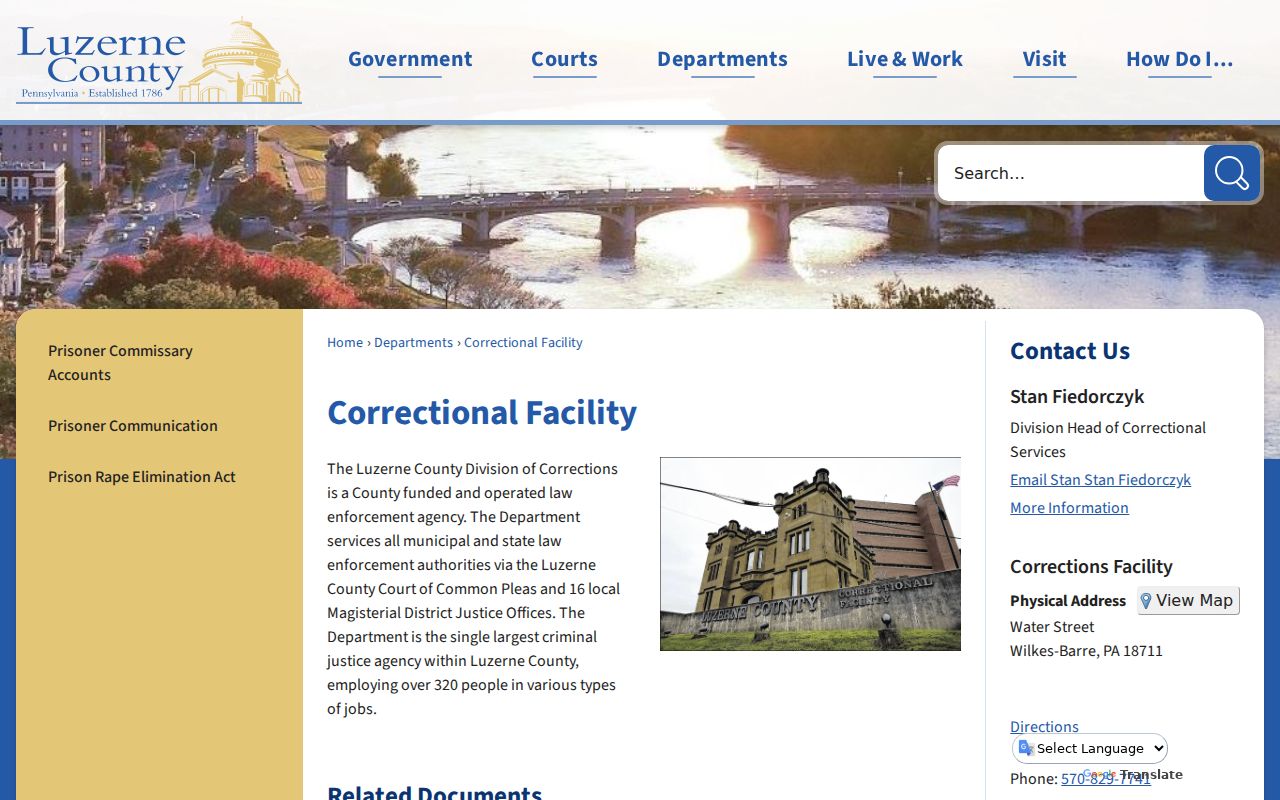
The county page points to complementary resources, which reinforces the difference between county, state, and federal custody systems.
The Pennsylvania Treasury unclaimed-property search is another official name-search service with a very limited purpose. A result begins a claim and documentation process; it does not establish a Luzerne address or household connection.
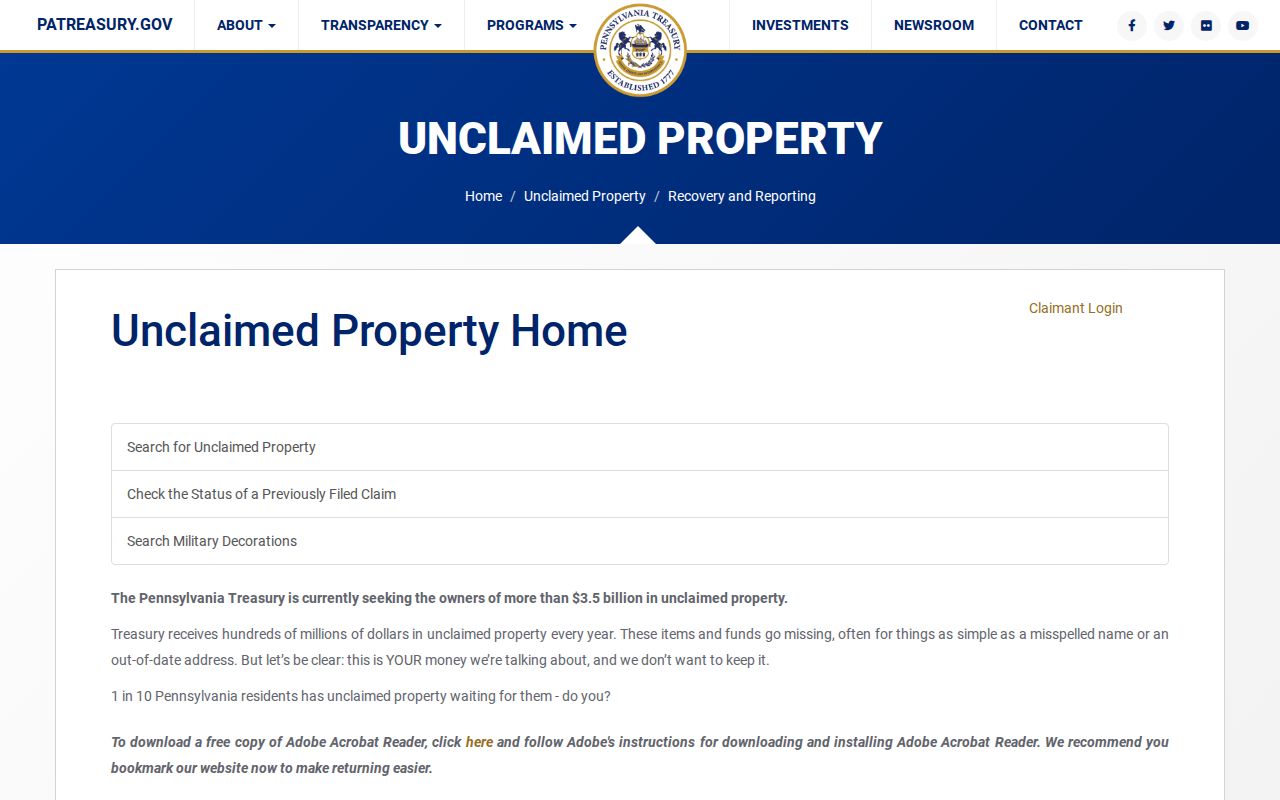
The Treasury service supplies a claimant workflow for a possible owner match. Keep that result separate from property, voter, court, and directory evidence.
Luzerne Record Alerts Need Verification
The Recorder's free Record Alert service is a practical anti-fraud tool for a property owner or a person monitoring a PIN. Enrollment can cover up to five names or PINs. The county is explicit that an alert does not stop a recording and does not establish that a document is valid. It provides a prompt to contact the Recorder and examine the actual recorded citation when something appears.
That distinction is useful across all Luzerne record work. A property owner label, mailing address, docket entry, directory line, or automatic alert is not the final conclusion. Compare dates, party roles, legal descriptions, and the custodian's permitted copy route. For an estate or family-history question, a documented index trail can lead to the Register, Records Facility, library, archive, or a targeted records request.
The Pennsylvania State Police public registry is pictured below. Its public-protection purpose and misuse warning are separate from the Recorder's property-notification service.
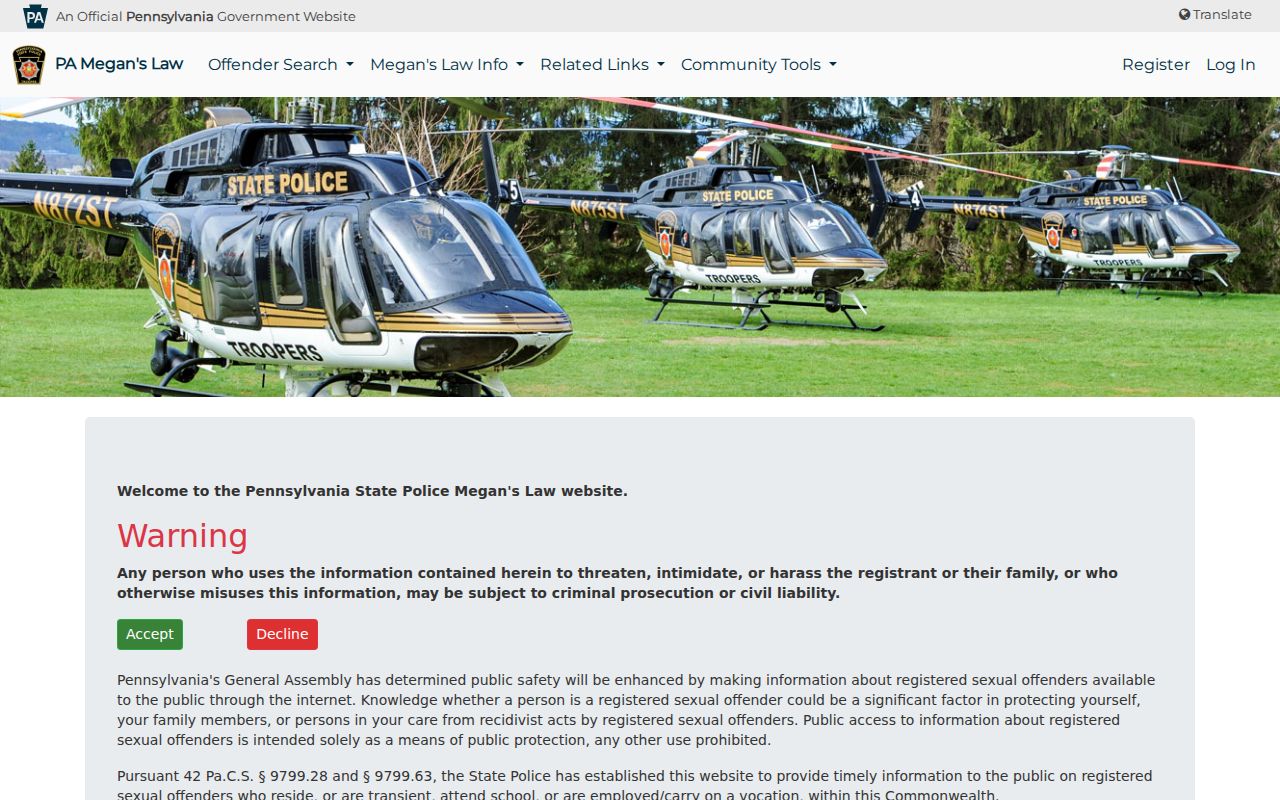
Official public-safety resources carry their own legal and use limits. They are not substitutes for a property, court, or vital-record verification path.
Use a Luzerne Right-to-Know Request Carefully
When the needed item is an existing county agency record that is not in a portal, a focused RTKL request can be the next step. Identify the exact agency, type of record, date range, property PIN, book/page, docket number, or name variation. Ask to inspect rather than copy when that is sufficient, and use the cost-notice option if appropriate. The Office of Open Records publishes the general Pennsylvania fee schedule, while a special statutory or custodian fee may still apply to a Recorder or vital-record request.
RTKL is not a workaround for protected court, adoption, voter, or address-confidentiality records. For a court file, use the written case-record and transcript/copy forms supplied through the judicial-services pages. For a birth, death, marriage, or estate record, use the office and eligibility route named by that custodian. A precise request reaches the right Luzerne record system faster and leaves a useful paper trail if a response must be reviewed or appealed.
Note: Keep the written request and agency response together with the portal citations and dates used in the Luzerne search.